Not every employee can walk or cycle all the way to work, but that doesn’t mean active travel can’t play a role in their commute. In this guest blog, CalCommuter and the Walk Wheel Cycle Trust explain how the Active Connections project is helping organisations uncover realistic opportunities to combine active travel and public transport, creating practical alternatives to driving.
Ahead of their session at the National Modeshift Convention, they share insights from the Active Connections project and explain why focusing on realistic journeys, rather than theoretical alternatives, is key to achieving lasting change:
When people think about active travel to work, the obvious question is often: Could this employee walk or cycle all the way to their workplace?
For some people, yes. For many others, particularly those with longer commutes, no. But that does not mean active travel has no role to play. Sometimes the opportunity is not replacing the whole car journey, but solving the part that currently makes public transport impractical. That is the idea behind the Active Connections project, being delivered by CalCommuter with support from Walk Wheel Cycle Trust, which Hannah Chivers (WWCT) and David Smith (CalCommuter) will be talking about at this year’s Modeshift National Convention.
The first part of the journey can shape the whole commute
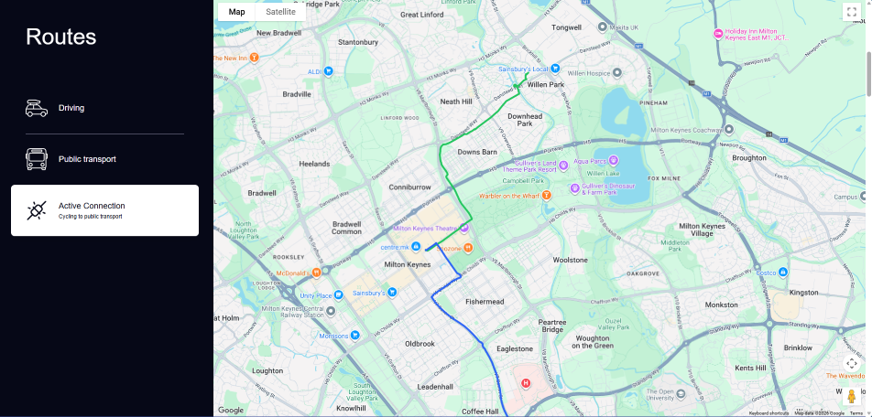
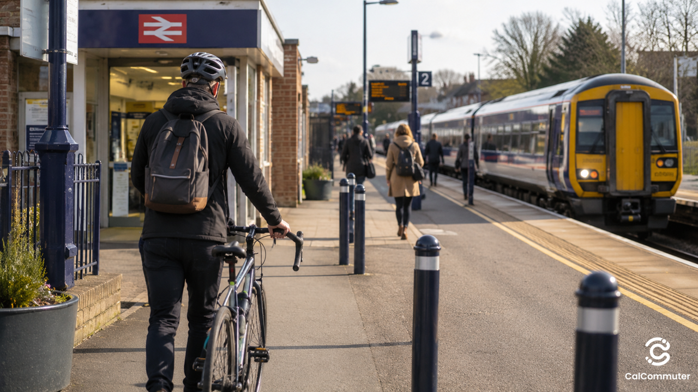
An employee might live 20 or 30 miles from work, making walking or cycling the full distance unrealistic. But perhaps there is a good rail or bus connection for most of the journey. The problem may simply be getting to the station or transport hub. If that connection is awkward, the easiest option may still be to drive all the way. So, the more useful question becomes: Could walking or cycling make public transport a viable option for the wider commute?
In some cases, a relatively short active journey could unlock a much longer journey by public transport. And, in some cases, uncover a time and / or cost saving due to “linking” with the public transport interchange at a better time, or saving the cost of one leg of public transport.
Start with real journeys, not assumptions
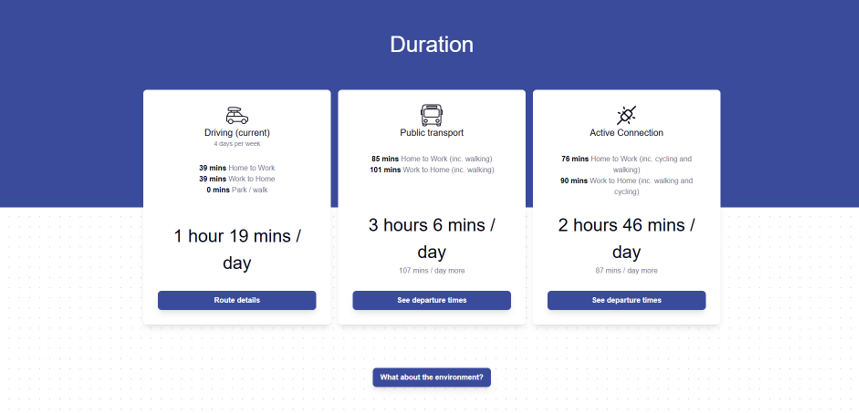
Traditional travel surveys tell us how employees travel today. The more interesting challenge is understanding how they could realistically travel tomorrow. That means looking beyond whether an alternative commute technically exists and considering journey time, cost, working hours, public transport availability and journey complexity.
One principle we have developed through CalCommuter is that realistic alternatives matter more than identifying the maximum number of theoretical ones. One implausible recommendation can undermine confidence in the rest. The reality is that for some employees, driving will remain the only practical option. The value comes from identifying where credible opportunities exist.
Opportunities are not evenly distributed
Workplace travel opportunities tend to cluster. One worksite might have many employees with realistic active travel or public transport alternatives, while another has relatively few. Similar patterns can emerge across settlements, transport corridors and different parts of the workforce.
Organisations have limited budgets and resources. Moving from workplace travel data to practical action means using that evidence to help decide where to focus cycling facilities, public transport promotion, car-sharing activity or other measures.
We are increasingly building this thinking into CalCommuter. Our new Insights functionality, developed through an Innovate UK “Bridge AI” funded project, helps organisations and delivery partners identify where different opportunities are concentrated. Targeted AI-assisted message drafting can then help practitioners reach the employees for whom those opportunities are most relevant.
Data identifies the opportunity. Collaboration helps turn it into action.
Analysis can show that a realistic journey exists. It cannot fully explain whether someone feels confident cycling to a station, whether local infrastructure feels safe or what support would make a difference. Workplace travel practitioners and delivery partners bring local knowledge, behaviour-change expertise and direct engagement.
The strongest approach combines both: data helps identify who, where and why; practitioners and delivery partners help determine what to do about it.
What we’ll be sharing at Modeshift
Active Connections is being developed through an Active Travel England-funded project exploring how workplace commute data can identify realistic active connections to public transport and support more targeted action.
At the Modeshift National Convention, we’ll share what we have learned about combining workplace data, realistic journey analysis, targeted engagement and collaborative delivery.
The biggest opportunity for the Active Connections project is not simply to identify more ways people could travel. It is to understand where change is genuinely possible, what is getting in the way and where limited time and investment should be focused. That might mean a short cycle unlocking a much longer public transport journey, one worksite having far greater potential than another, or some employees having no realistic commute alternative today.
The role of data is to make those differences visible. The role of practitioners and partners is to decide what to do with them. Because the most useful question is not simply: “How do we encourage more sustainable travel?” It is: “Where are the realistic opportunities — and what should we do next?”