With more than 30,000 students, 8,000 staff and nearly 7,000 bedrooms on site, University of Warwick operates like a small town.
Spanning over 700 hectares and located between two local authority areas, the campus welcomes students, staff, local residents and international visitors all year round. Managing how people move around such a large and busy site is no small task.
Through a clear Travel Plan and the support of Modeshift STARS Business, the University is reshaping everyday journeys – creating a campus that feels safer, more accessible and less vehicle-dominated.
The change
As the University continues to grow, so does the demand for travel to and from campus.
Historically, the site was designed around cars, with extensive central parking dating back to the 1960s. Over time, this led to a campus that felt vehicle-focused.
Recognising the need to support growth differently, the University began to rethink how people travel – with a focus on reducing car dominance and encouraging healthier, more sustainable everyday journeys.
George Saxon, Head of Transport Systems and Operations, explains:
‘As the University grows, we recognised that we need to grow sustainably and change the way people travel to campus.
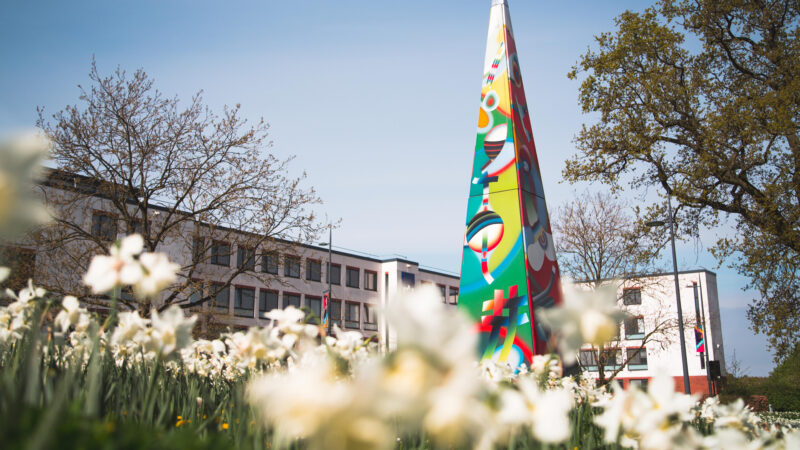
Redesigning the Campus
Significant changes have already been delivered:
- Car parks moved from the centre to the edge of campus
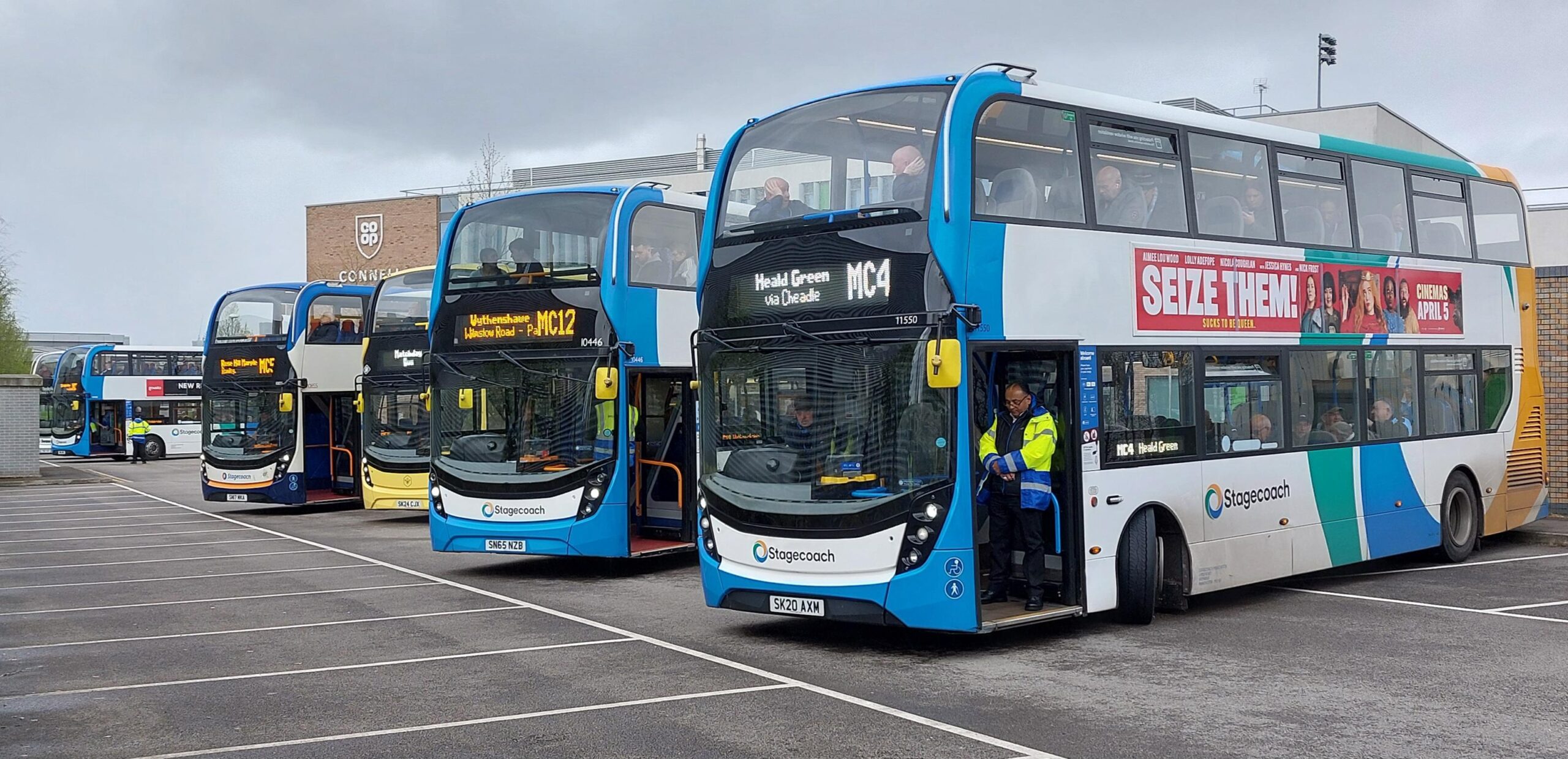
- A new bus interchange improving services and access
- Upgraded walking and cycling routes
- A central piazza designed as a pedestrian-friendly hub
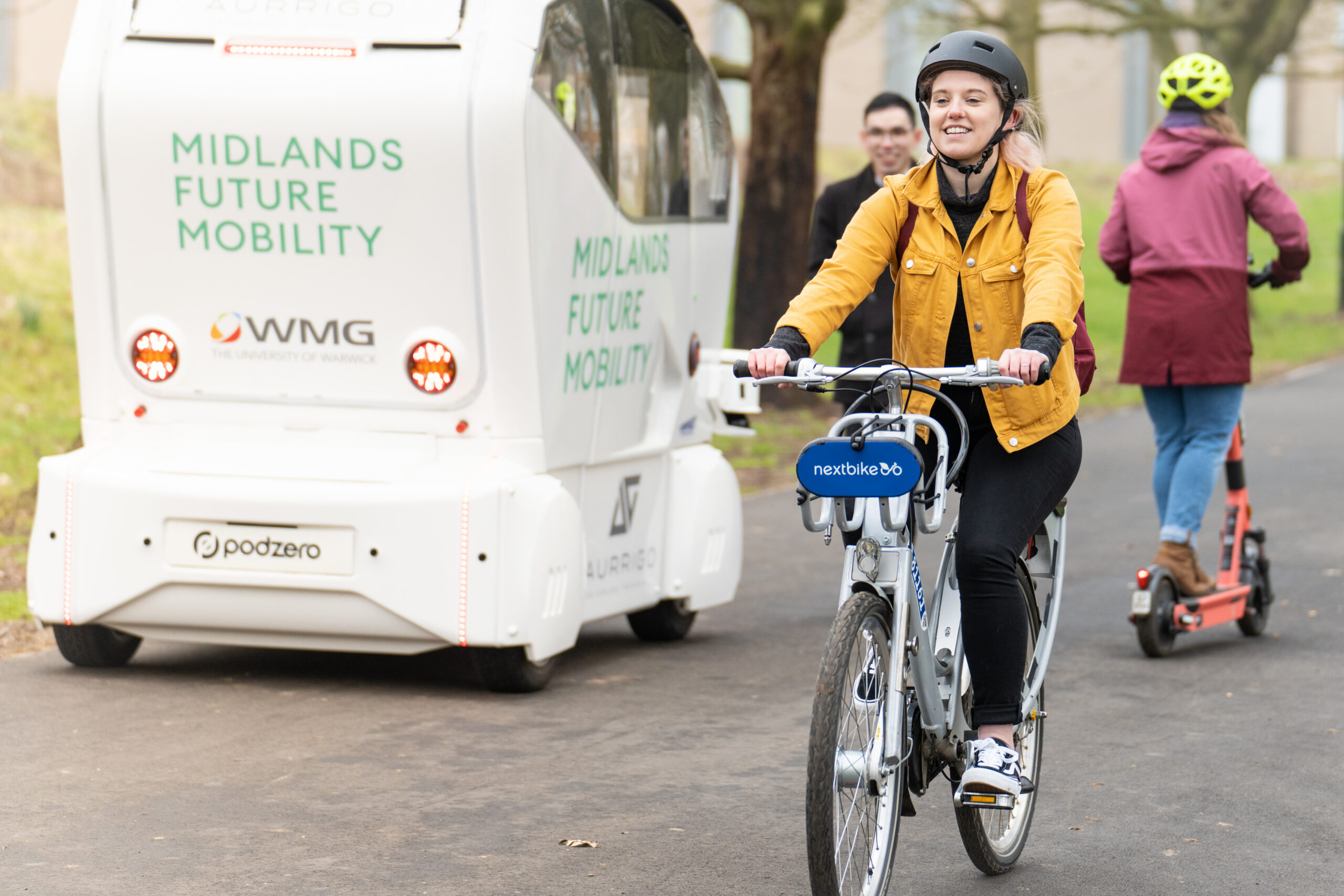
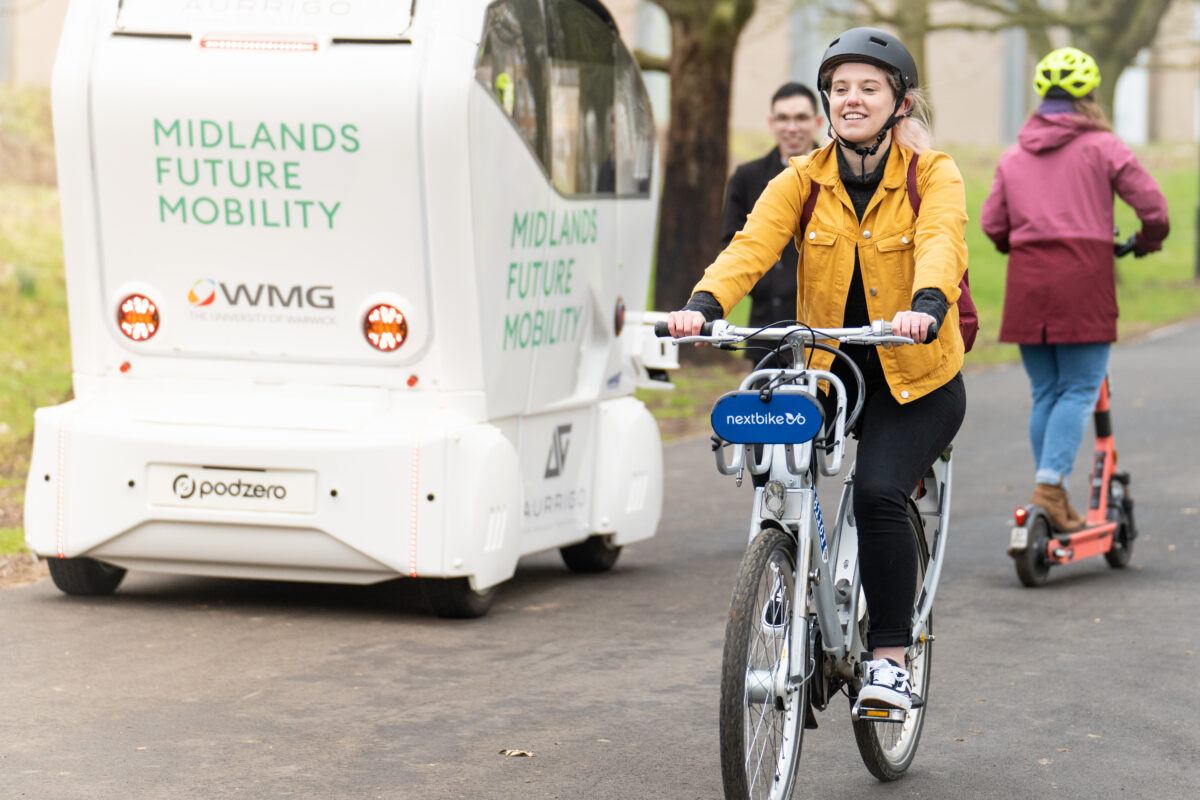
- One-way vehicle traffic with a segregated mobility lane for cycles and e-scooters
The long-term ambition is bold: a fully segregated cycle lane network across the entire internal road system, future-proofed for emerging forms of mobility.
It’s about building infrastructure that supports active travel for the next 5, 10, 15 years and beyond.’
Managing car parking differently
One of the most significant changes was the introduction of a charge for vehicles entering campus, using an automated camera system.
While initially challenging, the change has been widely accepted and has influenced travel choices.
Importantly, parking income is reinvested into improving transport options on campus – helping support bus services, walking routes and cycling facilities.
The University also uses postcode analysis to understand where staff and students live, working with bus operators to reflect demand in services offered.
Measuring progress with STARS Business
The University uses Modeshift STARS Business to manage, monitor and strengthen its Travel Plan.
Introduced through partnership working with Coventry City Council’s Sustainable Travel Network, the STARS platform provides structure, accountability and external validation.
George reflects:
‘STARS strengthens our internal and external credibility. There have been some big transport changes at the University and being able to demonstrate what we’re investing in and planning really supports that narrative.
The platform allows the University to:
- Monitor progress clearly
- Benchmark against other organisations
- Separate targets for staff, students and community users
- Provide externally reviewed evidence of impact
‘It’s been really well received internally. Having the Travel Plan reviewed externally is valuable, and it gives us a strong base to report on progress in future.’
Supporting long-term investment
An unexpected benefit of formalising the Travel Plan through STARS has been stronger internal financial support.
George explained: ‘Having a clear, structured framework has enabled better conversations about budget. It’s not a checklist -it’s a strategic roadmap.’
By clearly mapping short, medium and long-term priorities, including parking changes and reinvestment strategies – the Transport and Mobility team secured longer-term funding confidence.
What’s next?
The next priority is reviewing the longer-term parking strategy, freeing up additional space to support campus growth and improve the pedestrian and cycling experience further.
The aim is clear:
- Safe, well-maintained walking routes
- High-quality cycle infrastructure
- Clear, accessible travel information
- A campus designed around people, not vehicles
Endorsement: STARS Business
For the University of Warwick, STARS Business has provided more than accreditation. It has strengthened credibility, structured delivery and supported long-term investment.
‘STARS has helped us demonstrate progress, benchmark ourselves and build confidence internally. It’s strengthened how we manage and communicate our Travel Plan.’
University of Warwick’s experience shows how large, complex organisations can successfully reshape everyday journeys when strategy, infrastructure and measurement work together.